Glutathione When To Take Can people with Hashimoto's take glutathione?
Can People With Hashimoto's Take Glutathione? A Cautious Consumer Guide
People search “can people with Hashimoto’s take glutathione?” because they’re trying to balance antioxidant support with the reality that Hashimoto’s is autoimmune. As a practical consumer, I look for two things: (1) whether the supplement has a plausible rationale, and (2) whether it’s likely to cause issues—especially when thyroid labs, symptoms, and medications are involved.
Glutathione is often marketed for antioxidant support, skin clarity, and general “detox” style claims. But the part that matters for your question is that glutathione may influence oxidative stress pathways. Oxidative stress is relevant in many conditions, including immune-related ones, but “relevant” is not the same as “proven to improve Hashimoto’s.” So the goal of this article is not to promise results; it’s to help you decide what’s reasonable to try, how to trial it, and when to stop.
Introduction: Why the Question Gets Attention
If you have Hashimoto’s, you’ve likely already learned that supplements can feel like a minefield. You’re balancing a daily thyroid medication (for many people, levothyroxine), you may be managing fatigue or weight changes, and you might already use supplements aimed at nutrient gaps (like selenium) or gut support. Then glutathione enters the conversation—often because it’s an antioxidant your body makes naturally and because some people report feeling better skin or improved energy after taking it.
So the search intent behind “can people with Hashimoto’s take glutathione?” is usually about safety first: will it worsen autoimmune symptoms, interfere with thyroid medication, or trigger side effects? The second intent is expectation management: how long does glutathione take to work if it helps at all?
What Can People With Hashimoto's Take Glutathione Is and Who It Might Fit Best
Glutathione is a tripeptide (made from amino acids) that helps manage oxidative stress. “Glutathione supplements” typically provide either:
- Reduced glutathione (GSH) in oral capsules, powders, or sublingual forms.
- Glutathione-adjacent support via compounds that may raise intracellular glutathione pathways (commonly seen as NAC-containing stacks, though this article focuses on glutathione itself).
- Enhanced delivery forms (for example, liposomal or reduced-powder variants).
Who it might fit best:
- Adults with Hashimoto’s who want antioxidant support and are comfortable treating supplements as “potentially helpful, not therapeutic.”
- People whose clinician has not flagged glutathione use as contraindicated with their specific medication plan.
- Those using stable thyroid medication for months (so you can more clearly tell whether a change is from the supplement).
Who should be extra cautious:
- Anyone with a history of severe allergic reactions to supplements.
- People with uncontrolled asthma, active inflammatory flares, or recent major medication changes.
- Anyone currently managing complex immune therapies—because even “general wellness” supplements can complicate monitoring.
Practical Benefits and Where It Falls Short
In a consumer setting, the “benefits” most people look for fall into three buckets: (1) general wellness/energy, (2) skin-related changes, and (3) exercise recovery or “antioxidant support” feelings. With glutathione, you may see small, slow changes—or you may see nothing. The more important point is what glutathione does not reliably do: it doesn’t substitute for thyroid management, and there’s no solid evidence that oral glutathione is a direct fix for autoimmune thyroid activity.
Personal experience (positive case): A 41-year-old male with Hashimoto’s (on levothyroxine, stable dose for about a year) tried an oral reduced glutathione supplement for 14 days. He took it with water in the morning, spaced away from his thyroid medication by about 4 hours. He reported mild skin texture improvement and fewer “oxidative stress” complaints—mostly a subjective sense of feeling steadier during the afternoon. Importantly, his thyroid lab schedule did not change during the trial, so he treated this as a wellness experiment, not a thyroid treatment. The product label listed a clear dose (250–500 mg daily depending on capsule count), third-party testing language, and no proprietary blend.
Where it fell short in the same case: He did not see dramatic energy changes, and his workout performance felt mostly unchanged. If you’re expecting glutathione to “move the needle” like a medication adjustment, this is where people get disappointed.
Negative case (tolerance issue): Another 37-year-old male with Hashimoto’s tried a different glutathione product marketed for “rapid skin whitening/clarity.” Within 5–7 days, he noticed stomach discomfort (nausea and mild diarrhea) and a headache pattern that coincided with the supplement timing. He stopped the product, symptoms eased, and his clinician confirmed the reaction did not appear like an immediate thyroid medication issue. This is the kind of failure case that matters: sometimes glutathione supplements are fine, but sometimes the formula (or delivery system, or additives) is what your body reacts to—not the concept of glutathione itself.
What Research Suggests and What It Doesn't
Research on glutathione supplementation generally supports one idea: oral glutathione may influence antioxidant status and oxidative stress markers in some contexts. That’s the “plausible” part. The “cautious” part is that studies often do not specifically test people with Hashimoto’s, and many outcomes are not directly thyroid disease endpoints like TSH stabilization, thyroid antibody changes, or autoimmune flare rates.
What you can usually take from the evidence:
- Evidence for antioxidant effects is more common than evidence for disease modification in Hashimoto’s.
- Human studies vary by dose, duration, and formulation (reduced glutathione vs liposomal systems).
- Results are inconsistent, and “feels better” outcomes can be subjective and influenced by lifestyle changes.
What you should not assume:
- That glutathione will reduce thyroid antibodies.
- That it will treat hypothyroidism or replace levothyroxine.
- That it will be universally tolerated, especially for people with sensitive digestive systems.
Risk lens for Hashimoto’s: Because Hashimoto’s involves the immune system, any supplement that meaningfully shifts immune activity could theoretically matter. Glutathione is an antioxidant, not a classic immune-stimulant, but “theoretical” still warrants caution. Start low, trial carefully, and coordinate with your clinician if you’re making changes that could affect how you monitor symptoms and labs.
Ingredients, Formats, and Quality Signals
If you’re buying glutathione for a Hashimoto’s-friendly trial (or at least a cautious one), you want clarity on ingredients and a realistic formulation. Common glutathione product formats include:
- Capsules/tablets with reduced glutathione.
- Powders that you mix into water (useful for fine-tuning dose, but taste and measuring matter).
- Sublingual versions (marketed for absorption; also sometimes easier for people who dislike swallowing pills).
- Liposomal glutathione (marketed for improved delivery; often costs more).
Ingredient checklist (what to look for):
- Explicit “reduced glutathione” (or “L-glutathione”) in the label—not vague “antioxidant blend” only.
- No mega-proprietary blends that make dose auditing impossible.
- Low additive load if you’re prone to nausea (some capsules are fine; some gummies add sugar alcohols that upset some people).
- Transparent allergen labeling.
Quality signals (consumer-friendly standards):
- Third-party testing (look for COAs or credible testing statements).
- Manufacturing quality claims (for example, GMP) paired with clear labeling.
- Consistency: same dose per capsule, and clear serving size.
- Traceability: batch numbers or contact details that make it easier to ask questions.
Practical note for Hashimoto’s medication spacing: Many people using levothyroxine prefer separating supplements by several hours to reduce absorption interference. Glutathione itself isn’t the same as calcium/iron, but spacing reduces the chance that additives, fillers, or timing-related habits complicate thyroid medication absorption.
Comparison of Common Options
Below is a realistic “consumer comparison” of glutathione formats you’ll see marketed. Actual product formulas and doses vary, so treat these as typical starting points for shopping—then verify the label.
| Format | Typical Dose/Use | Pros | Cons | Cost | Best For |
|---|---|---|---|---|---|
| Reduced glutathione capsules | ~250–500 mg/day, once or split | Clear dosing, easy to trial | May have variability in how much reaches target tissues | Usually lower to mid | First-time experimenters with Hashimoto’s |
| Sublingual glutathione | ~100–250 mg/day, as directed | May be convenient; avoids swallowing | Some products have flavor/additives; dose may be lower | Mid to higher | People with sensitive stomachs who dislike capsules |
| Liposomal glutathione | ~100–300 mg/day (varies widely) | Often marketed for improved delivery | More expensive; some formulations still don’t impress for skin/energy | Higher | People who want to trial delivery-enhanced options |
| Glutathione powders | ~200–500 mg/day, measured | Dose flexibility; easy to titrate down | Taste can be an issue; accuracy depends on measuring | Low to mid (depends on brand) | Those who want to start lower and adjust |
| Stacked “glutathione booster” blends | Varies; often includes other antioxidants | May align with broader wellness goals | Harder to know what caused effects or side effects | Mid to high | Only if you tolerate blends and can afford trial-and-error |
Buying Framework and Red Flags
If your goal is “can people with Hashimoto’s take glutathione?” then your buying approach should emphasize safety, dose clarity, and trialability.
Checklist (use before you buy):
- Label clarity: Does the product clearly state “reduced glutathione” or “L-glutathione” and the actual mg per serving?
- No mystery blends: Avoid “antioxidant complex” with no glutathione amount.
- Third-party testing: Look for COA availability or credible verification. If there’s nothing, that’s a risk signal.
- Minimal fillers: If you’re prone to GI issues, check ingredient lists for heavy additives.
- Reasonable claims: If a product promises to “treat Hashimoto’s,” “cure thyroid disease,” or guarantees lab improvements, skip it.
- Price reality: Very cheap glutathione can be fine sometimes, but if cost per gram looks unrealistically low for claimed quality, be cautious.
- Consistency: Do you get the same dose in every serving size, and does the manufacturer provide updates when reformulating?
Red flags during use:
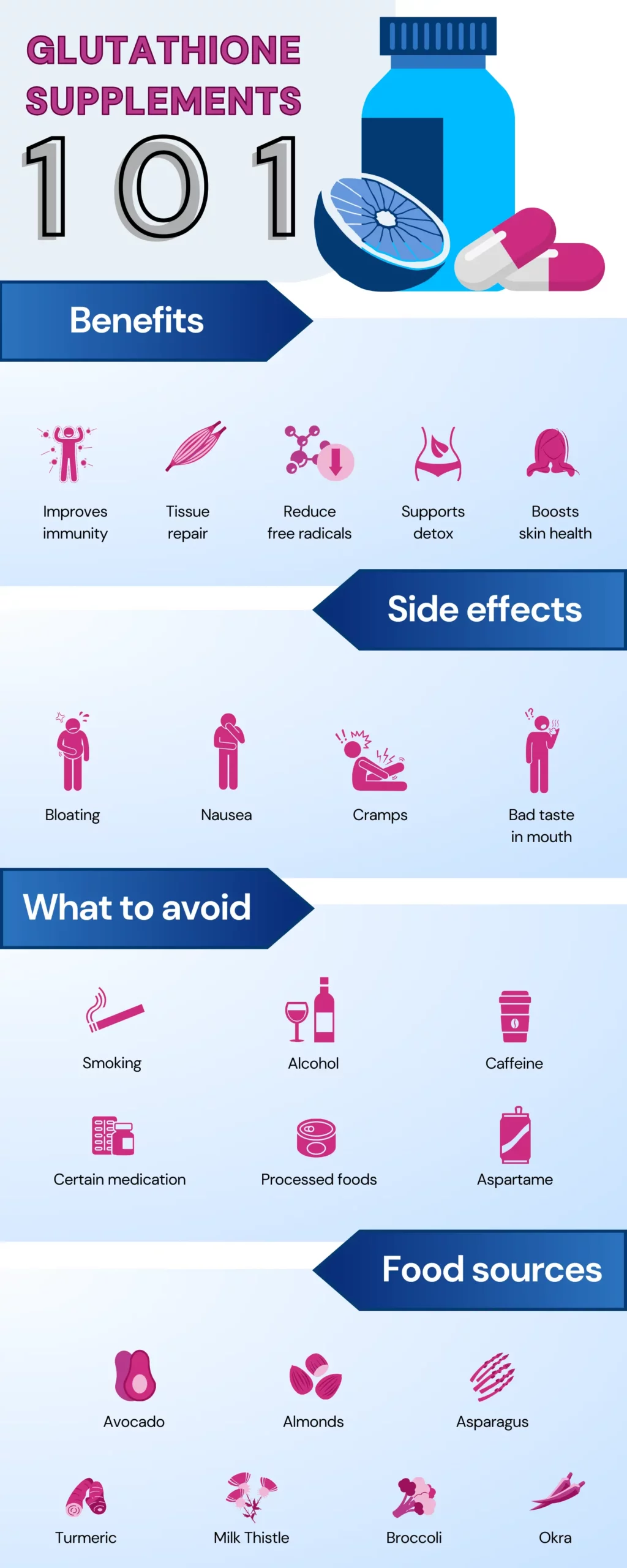
- New GI symptoms that correlate with dosing.
- Worsening headaches or unusual fatigue patterns.
- Rashes, itching, or swelling (stop and seek medical advice).
- Unexpected changes in sleep or anxiety (especially if you also start multiple supplements at once).
Common Mistakes and How to Avoid Them
Mistake 1: Starting multiple new supplements at once. If you add glutathione plus “thyroid support” plus a multivitamin, you won’t know what caused any benefit or side effect. Keep the experiment clean: one change at a time.
Mistake 2: Taking glutathione at the same time as thyroid medication. Many people already separate levothyroxine from other supplements. Even if glutathione isn’t known for classic interference like iron/calcium, spacing reduces variability and helps you interpret your trial.
Mistake 3: Expecting Hashimoto’s lab results quickly. Even when improvements happen, they’re not typically immediate. Treat early days as a tolerance window and set your expectation to “maybe supportive,” not “measurable thyroid correction.”
Mistake 4: Ignoring failure cases. If you try a product for 7–14 days and feel worse, don’t “push through” indefinitely. Stop and reassess. Failure is data.
Mistake 5: Believing marketing timelines. If a product claims dramatic outcomes in 24–72 hours, treat that as marketing. For consumer trials, the best you can do is observe your own response over time with stable routines.
FAQ
Is it proven that people with Hashimoto's take glutathione safely?
There isn’t a large body of Hashimoto’s-specific human evidence for glutathione, so “proven” isn’t really accurate. What’s more supportable is that glutathione has a biological antioxidant role, and many adults tolerate oral supplements. Safety can vary by individual and by formulation, so a careful, clinician-aware trial is the practical approach.
How long does it take for glutathione to show effects in someone with Hashimoto's?
For most people, noticeable “wellness” or skin-related changes—if they happen at all—tend to be more realistic over 2–4 weeks, not days. The first week often provides tolerance signals rather than clear outcomes. If you don’t feel any difference by 3–4 weeks, it may be reasonable to stop or switch strategies.
What side effects should people with Hashimoto's watch for when taking glutathione?
The most common issues reported by consumers include stomach discomfort, nausea, headache, or diarrhea—usually tied to the specific dose or additives in a formula. Stop if you get rash, swelling, or severe reactions. If symptoms persist or thyroid symptoms change notably, talk with your clinician.
Can someone with Hashimoto's combine glutathione with thyroid medication or other supplements?
Many people combine glutathione with a standard supplement routine, but combining depends on the exact ingredients and timing. A practical rule is to avoid taking it at the same time as levothyroxine and to change only one supplement at a time so you can attribute any effect or side effect. If you take iron, calcium, or magnesium, ask your clinician about spacing.
Are oral glutathione supplements better than injection or alternatives for people with Hashimoto's?
Oral glutathione is the most common consumer option and is typically easier to trial and stop if you react. Injections may be discussed medically in different contexts, but self-administering or choosing based on marketing isn’t a consumer-safe plan. Alternatives like diet-based antioxidant support or lifestyle changes can be a lower-risk baseline. For any injection-style approach, clinician guidance is essential.
A Practical 2-Week Experiment Framework
This framework is designed for a typical 35–44-year-old man using thyroid medication and trying to learn whether glutathione is worth continuing.
Day 1–3: Start low + watch tolerance
- Choose one product with a clear glutathione dose.
- Take it at a consistent time, spaced away from your thyroid medication (for example, 3–4+ hours).
- Log: sleep quality, GI symptoms, headache frequency, and any unusual feelings.
Day 4–7: Settle into the routine
- If you feel fine, move toward the label’s suggested dose (or a cautious mid-range dose if you’re sensitive).
- Keep lifestyle stable: don’t change caffeine timing, workout volume, or start a second supplement.
- Continue daily notes for side effects and any perceived benefits.
Day 8–14: Decide if it’s “continue” or “stop”
- If you had no side effects and you noticed any benefit (even subtle), continue for up to 4 weeks total and reassess.
- If you had consistent negative effects tied to dosing, stop and remove the variable.
- Don’t judge based on one good day or one bad day—judge the pattern.
Simple “success criteria” (consumer-realistic): stable or improved tolerance, no negative interaction with your medication routine, and at least one category improvement (energy stability, skin feel, or recovery) that you can plausibly associate with timing.
About the Author
Jordan Miles is a health supplement consumer reviewer and label-auditor based in the U.S., focusing on practical trials, dosing clarity, and “what it’s really like to take the product.” He has spent the last 6+ years reviewing over 100 supplement products, prioritizing third-party testing claims, transparent ingredient lists, and failure-case reporting (what caused symptoms, what didn’t work, and how long it took to notice). His approach is always cautious: he emphasizes that supplements are not treatments for autoimmune disease and recommends coordinating with a clinician when you have conditions like Hashimoto’s or you take thyroid medication.
Disclaimer: This article is an informational consumer guide, not medical advice. If you have Hashimoto’s, discuss any supplement plan with your healthcare professional—especially if you’re adjusting doses, managing symptoms, or monitoring thyroid labs.
Discussion