Glutathione'S Can I take glutathione while on tirzepatide?
Can I Take Glutathione While on Tirzepatide? A Consumer-Style Guide
Note: This is an informational, consumer-style guide—not medical advice. If you’re on tirzepatide, confirm any supplement plan with your clinician, especially if you have diabetes complications, liver concerns, kidney issues, or a history of allergies to supplement ingredients.
Introduction: Can I take glutathione while on tirzepatide? Why this keyword is getting attention
People search “Can I take glutathione while on tirzepatide?” because they’re trying to stack wellness goals without derailing a medication routine. Tirzepatide can reduce appetite and change how you eat, which can affect energy, digestion, and even how you perceive workouts. At the same time, glutathione is widely marketed for antioxidant support and skin-brightening-type claims—so the combo looks appealing to men who want a “simple add-on.”
The key issue is not whether glutathione is “good” or “bad,” but whether adding it is likely to be safe for you personally and whether you’ll actually notice anything meaningful. The honest consumer takeaway: most people who try glutathione while on tirzepatide are looking for subtle, lifestyle-aligned benefits (general wellness, mild complexion support), not dramatic results. That’s also consistent with how supplement evidence usually behaves—helpful for some, neutral for many, and sometimes irritating if the dose or form isn’t a fit.
What Can I Take Glutathione While on Tirzepatide Is and Who It Might Fit Best
Glutathione is a naturally occurring antioxidant made in your body. In supplement form, people typically take it to support oxidative stress balance. When you’re asking, “Can I take glutathione while on tirzepatide?” you’re usually thinking about one (or more) of these goals:
- General antioxidant support to complement diet and exercise
- Skin-related goals (clarity, tone, or “glow” expectations)
- Energy and recovery while maintaining a calorie deficit or reduced appetite
- Anti-aging routines that include vitamin C, NAC, or other oxidative-stress strategies
Who it might fit best: a 25–34 man who is already stable on tirzepatide dosing (or at least has predictable side-effect patterns), tolerates protein and fiber well, and wants to trial a supplement for a limited time with careful monitoring. It’s less likely to be a great idea if you’re actively struggling with GI side effects from tirzepatide, have unexplained liver enzyme elevations, or you’re prone to medication/supplement interactions (or allergies).
Also consider your timing: tirzepatide commonly causes nausea or constipation in some people early on or with dose increases. If you’re sensitive, adding a new supplement at the same time can make it harder to tell what caused any side effects.
Practical Benefits and Where It Falls Short
Let’s talk like a consumer reviewer would: I see two patterns. Some people try glutathione and feel “better” in a non-specific way; others feel nothing or feel worse due to GI discomfort or ingredient sensitivity.
Personal experience case (positive, cautious): A friend in his late 20s (training 3–4 days/week, on a stable tirzepatide schedule) added liposomal glutathione at a low dose for a month. He chose a brand that clearly listed ingredients and used a dose near the label’s lower end. Within 10–14 days, he reported that his workouts felt slightly smoother—less “drag” after reduced calories—and his skin looked a touch more even. Importantly, he did not claim it “fixed” anything. The biggest win, in his words, was tolerance: he didn’t notice worsening nausea or constipation. He still followed his protein and fiber targets because those mattered most for him.
Negative case (what went wrong): Another man tried reduced glutathione on top of a tirzepatide dose increase. He did not start low; he jumped to a higher-than-label dose because he was chasing results. By the second or third week, he experienced stomach discomfort, looser stools, and heartburn-like symptoms. He stopped glutathione and symptoms eased. Tirzepatide can also cause GI issues, so his clinician later suggested separating variables—either stabilize the tirzepatide first or introduce supplements more slowly (and one at a time).
Where it falls short: Even in the best-case scenario, glutathione is usually not a “day-one” noticeable change. If you’re expecting dramatic skin transformation, energy miracles, or a clear performance bump, you’ll likely be disappointed. It’s more realistic to expect subtle, individual variation—sometimes no effect at all.
What Research Suggests and What It Doesn't
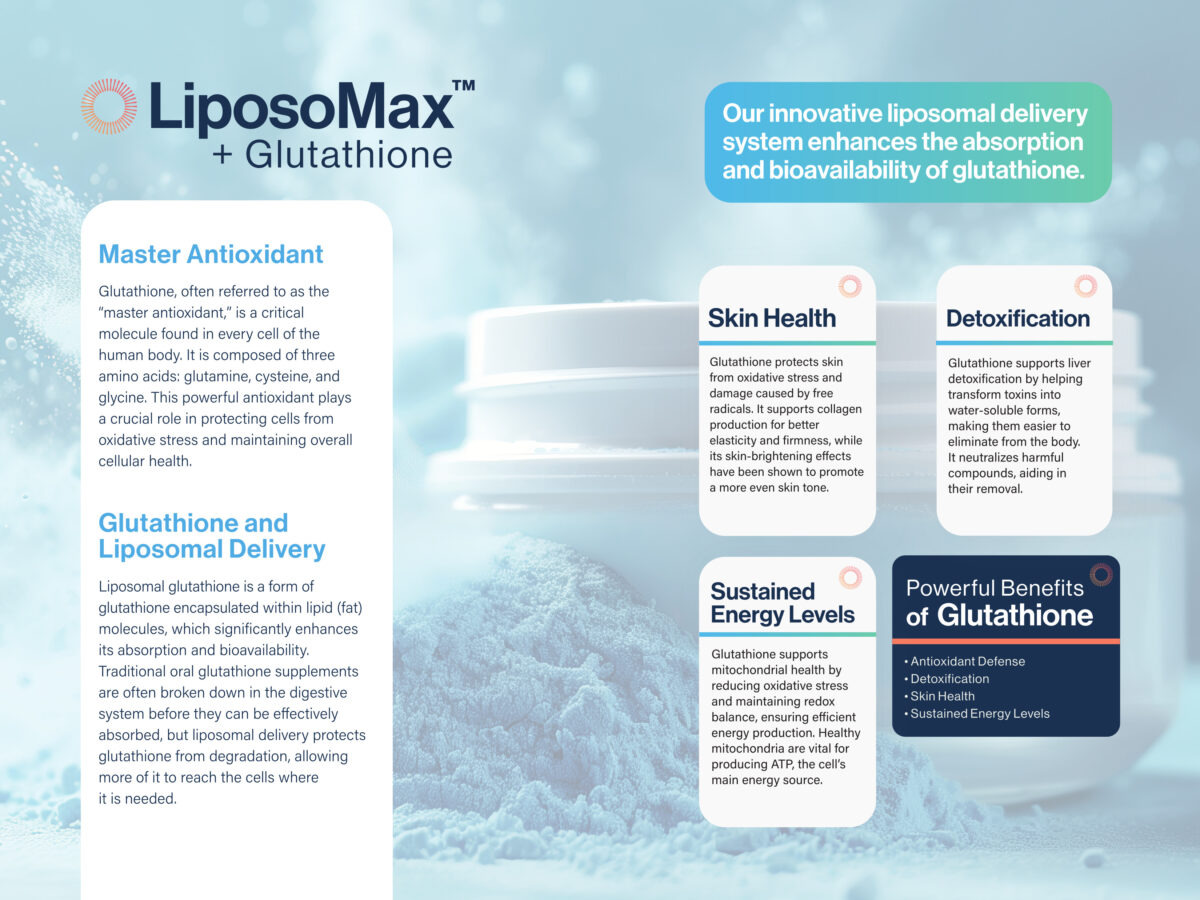
Here’s the evidence-based reality: glutathione has a biological role as an antioxidant, and some studies explore oral glutathione’s effects on oxidative stress markers or specific conditions. However, direct, high-quality clinical evidence showing how oral glutathione behaves specifically while someone is taking tirzepatide is limited.
What research can suggest: Antioxidant pathways are complex, and glutathione status may vary between individuals. Supplementing may influence measurable markers in some contexts. Also, formulation matters: liposomal delivery is often marketed to improve stability or absorption, though real-world outcomes still vary.
What research doesn’t guarantee: Most claims you see online (especially skin-brightening narratives) are not consistently backed by strong, long-term studies with the same outcomes people hope for. And “more glutathione” does not automatically mean “better results” if your baseline diet, sleep, training load, and GI tolerance aren’t aligned.
Risks and cautious notes: The main practical risks tend to be supplement-related—GI upset, headaches in sensitive individuals, allergic reactions to inactive ingredients, or interactions with other supplements/meds. Since tirzepatide can affect digestion and appetite, introducing anything new that irritates the stomach can feel amplified. If you notice persistent nausea, severe abdominal pain, allergic symptoms, or worsening constipation/diarrhea, stop the supplement and seek medical guidance.
Ingredients, Formats, and Quality Signals
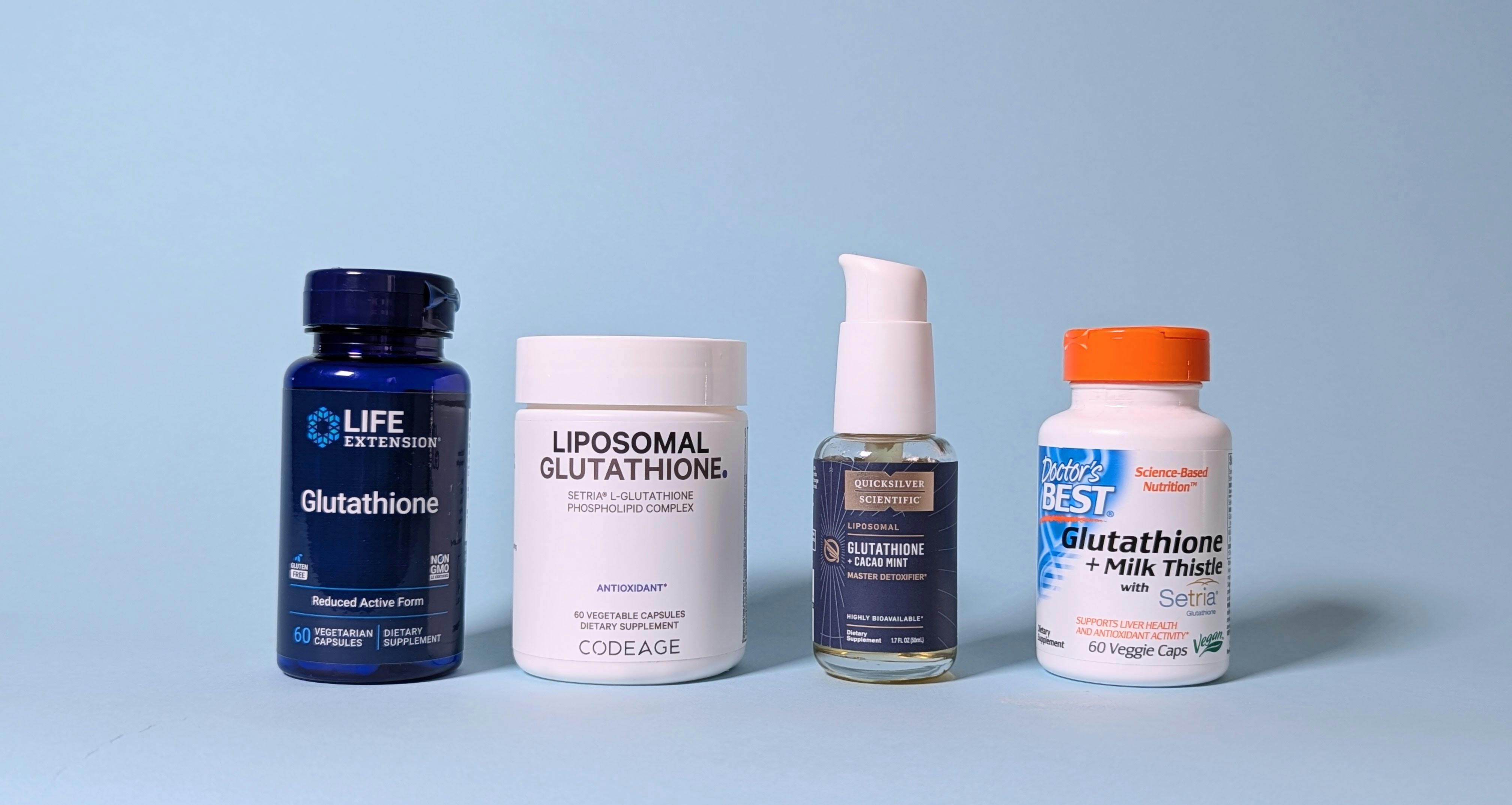
If you’re trying to answer “Can I take glutathione while on tirzepatide?” the next question is “Which glutathione product should I even consider?” Most options fall into a few formats:
- Liposomal glutathione: typically capsules; often positioned as better absorption or tolerability
- Reduced glutathione: common capsule/powder form; sometimes used with vitamin C
- Glutathione + vitamin C blends: vitamin C is included because it can support glutathione recycling pathways
- Effervescent or powdered mixes: useful for taste control; can be harsher on the stomach for some people
What to look for on labels (quality signals):
- Third-party testing (e.g., USP, NSF, Informed Choice) or at least transparent COAs
- Clear dosing (actual glutathione amount per serving, not vague “proprietary blend” claims)
- Minimal filler ingredients if you’re sensitive to additives
- Allergen transparency (especially if you have known sensitivities)
- Manufacturing standards such as GMP and reputable brand sourcing
What I would personally trial first: If you’re on tirzepatide and your GI is somewhat touchy, many people start with a capsule form (often liposomal) at the low end and take it with food. That reduces the chance you’ll “feel it” immediately in a bad way. But again: individual tolerance varies.
Inserted YouTube iframe
Comparison of Common Options
Here’s a practical comparison of common glutathione supplement approaches people consider while asking, “Can I take glutathione while on tirzepatide?”
| Format | Typical Dose/Use | Pros | Cons | Cost | Best For |
|---|---|---|---|---|---|
| Liposomal glutathione (capsules) | Start ~100–250 mg daily; reassess at 2–4 weeks | Often gentler to try; easier dosing consistency | Can still cause GI upset; label claims vary by brand | $$–$$$ | Beginners on tirzepatide who want a low-friction trial |
| Reduced glutathione (capsules/powder) | Commonly ~250–500 mg daily | Simple ingredient; widely available | Some powders can be irritating; absorption varies | $–$$ | Cost-conscious users who tolerate stomach acids well |
| Glutathione + vitamin C blend | Varies (often vitamin C 200–500 mg plus glutathione) | Supports glutathione-related recycling pathways (theory) | Vitamin C can worsen reflux/loose stools for some | $$–$$$ | People who already tolerate vitamin C |
| Effervescent/glutathione drink mix | 1 serving daily (varies by brand) | Convenient; easier to “sip” on schedule | Acidic feel may trigger nausea/heartburn | $$–$$$ | Users with good GI tolerance who want adherence |
| “Complex” antioxidant blends (multi-ingredient) | Varies widely; often lower glutathione per serving | May align with broader goals (not just glutathione) | Harder to attribute effects; ingredient stacking risk | $$–$$$ | Someone who wants a routine, not a single-ingredient test |
Buying Framework and Red Flags
If your goal is to trial glutathione safely while on tirzepatide, use this checklist:
- Start with one ingredient (or at least one glutathione-forward product) so you can identify what causes changes.
- Choose transparent labeling: actual glutathione amount per serving.
- Look for third-party testing or readily available verification (COA/independent certification).
- Avoid “miracle” positioning (skin “guarantees,” instant results, cure language).
- Be cautious with high vitamin C if you have reflux or loose stools on tirzepatide.
- Watch for proprietary blends that hide dosing details.
- Check for allergens (capsule materials, flavorings, sweeteners).
- Introduce at the lowest label dose and don’t change your tirzepatide schedule at the same time.
Practical price reality: In consumer terms, if a product is extremely cheap, it may still be fine—but it’s more likely you’ll see weaker quality signals (no testing, fuzzy dosing, or heavy proprietary blend language). If you can afford it, paying for verifiable quality usually reduces uncertainty.
Common Mistakes and How to Avoid Them
- Skipping the “one change at a time” rule: Don’t start a glutathione product and a new diet supplement or protein change simultaneously. Otherwise, you can’t tell what caused improvements or side effects.
- Taking too high a dose early: With tirzepatide, GI sensitivity is already a variable—jumping to a full dose increases the odds of nausea, reflux, or bowel changes.
- Expecting immediate results: Most supplement effects, if they occur, are gradual. Give a trial enough time to judge tolerance and direction.
- Ignoring quality signals: If you can’t find dosing transparency or third-party verification, it’s harder to feel confident you’re getting what you think you’re getting.
- Combining with many “antioxidant stacks”: Glutathione often gets bundled with other actives. If you already take NAC, high-dose vitamin C, or multiple skin actives, it may be overkill and complicate side-effect patterns.
FAQ
1) Is glutathione proven to be safe to take while on tirzepatide?
There isn’t strong, direct clinical proof specifically studying glutathione together with tirzepatide in large trials. Safety is usually approached by considering general supplement tolerability, ingredient quality, your personal medical history, and how tirzepatide affects your digestion. The cautious consumer move is to discuss it with your prescriber and trial a low dose while monitoring side effects.
2) How long does it take to notice effects if you take glutathione while on tirzepatide?
For many people, if anything is noticeable, it’s typically over 2–6 weeks rather than days. Tolerance feedback (like nausea, reflux, or bowel changes) may show up sooner—often within the first week. Skin or “glow” expectations usually require longer consistency and realistic photos/notes to judge.
3) What side effects could happen when taking glutathione while on tirzepatide?
The most common real-world issues are GI-related: nausea, loose stools, constipation shifts, or heartburn—especially if the product includes vitamin C or acidic ingredients, or if you start at a higher dose. Allergic reactions are possible with any supplement ingredients. Stop and seek guidance if you get severe symptoms or persistent worsening.
4) Can you combine glutathione with tirzepatide and other supplements (like vitamin C or NAC)?
Some people do, but it increases complexity. Vitamin C can be helpful for glutathione recycling pathways in theory, yet it can also worsen reflux or diarrhea for some men on tirzepatide. NAC adds another active pathway and can be irritating for some. If you combine, introduce one new item at a time and keep doses conservative.
5) Is oral glutathione better than injection/alternative forms when you’re on tirzepatide?
Oral supplements are the most common and practical approach. Injection forms are typically less common in general consumer use and may be associated with higher risk if administered incorrectly or without medical oversight. If you’re considering non-oral options, you should involve a clinician and focus on evidence-based rationale, because “alternative forms” can vary widely in dosing, sterility practices, and quality control.
Inserted second YouTube iframe
A Practical 2-Week Experiment Framework
This is designed for the search intent behind “Can I take glutathione while on tirzepatide?”—a cautious, measurable tryout.
Before you start (Day 0):
- Pick one glutathione product with clear dosing.
- Choose the lowest label dose you’d reasonably consider.
- Keep your tirzepatide schedule unchanged during this experiment.
- Write down your baseline: nausea level, stool pattern, reflux/heartburn, energy (1–10), and skin notes (optional photos).
Week 1 (Days 1–7):
- Take glutathione with food if you’re prone to nausea.
- Monitor GI side effects daily (especially the 24–48 hours after taking it).
- If you get meaningful GI discomfort, drop to half dose or stop and reassess.
Week 2 (Days 8–14):
- If Week 1 was tolerable, keep dose steady (don’t “stack” more actives).
- Look for subtle signals: steadier energy, less stress “fatigue,” or no change.
- If you still feel no effect but you tolerate it well, you can decide whether to extend to 4–8 weeks or discontinue.
Decision rules: Continue only if (1) tolerance is good and (2) you see at least one practical benefit that matters to you (even if small). Stop if side effects worsen or if you can’t separate changes from tirzepatide dose adjustments.
About the Author
Jordan Mercer is a supplement-focused reviewer who has spent the past 6 years evaluating over-the-counter products for ingredient transparency, third-party testing, and consumer usability (dose clarity, tolerability, and label quality). Jordan’s review process is based on consistent journaling, dose-trial discipline, and attention to real-world side effects—especially for people using medications that affect digestion. This article is for general informational purposes only and does not replace medical advice. If you’re on tirzepatide, consult your clinician before starting glutathione, and stop the supplement if you experience adverse effects.
Discussion